The New Maritime Security Law
The Belgian Navy's role in the legal shield for protection of critical infrastructure
By CPC G. Motmans, Belgian Navy
Abstract
De Belgische Marine staat voor de complexe taak om de kritieke maritieme en digitale infrastructuur te beschermen. Deze uitdaging vereist nieuwe tactieken, met name tegenover actoren zoals Rusland die zich richten op hybride oorlogsvoering, onderzeese kabels en windparken. Dit artikel analyseert de bedreigingen en de strategie van België en de NAVO om deze vitale belangen in de Noordzee en daarbuiten te verdedigen en de maritieme cyberbeveiliging te garanderen.
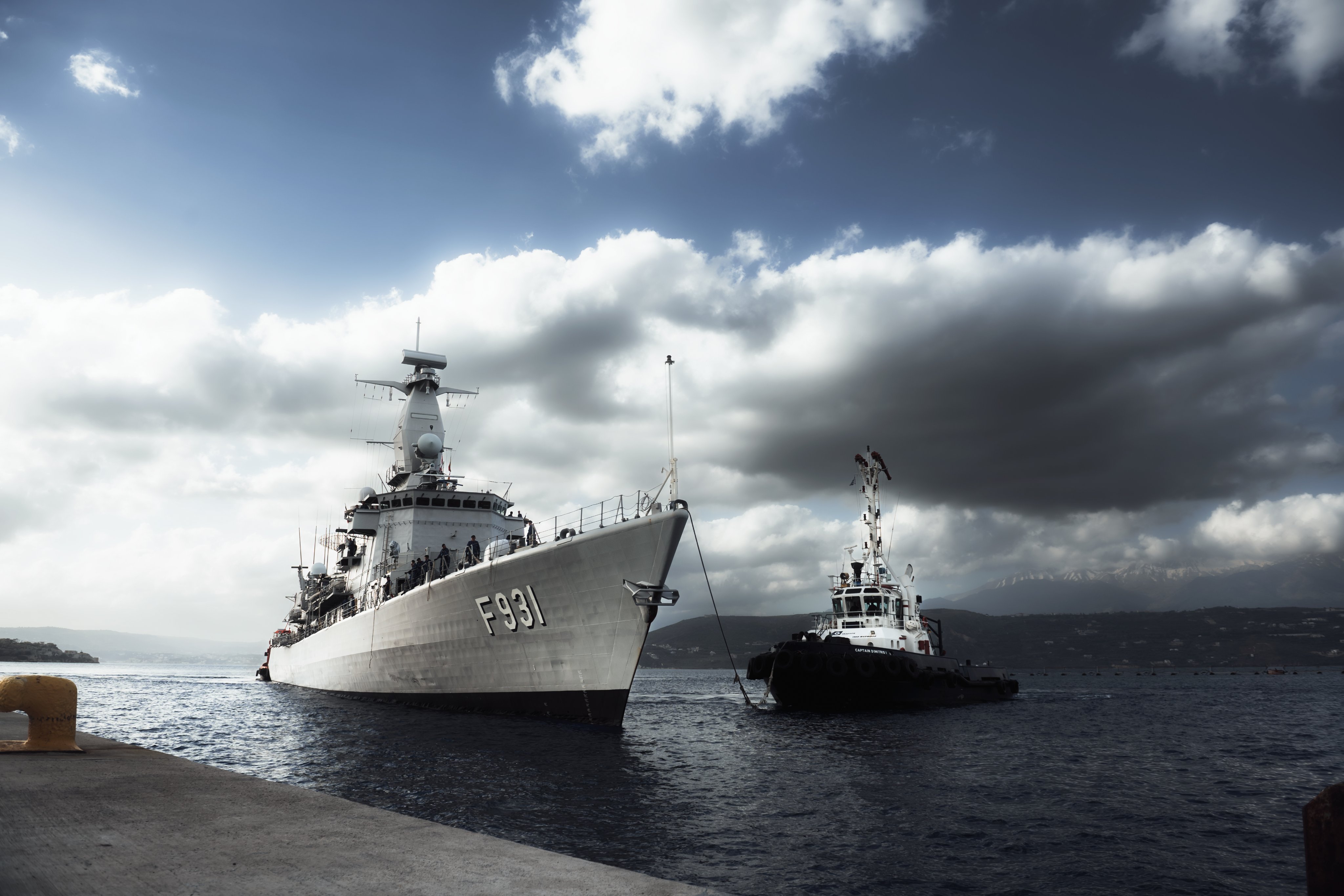 Belgian Multipurpose frigate Louise-Marie (source: Belgian Navy)
In June 2023, Dmitry Medvedev, Vice-President of the Security Council of the Russian Federation and former President, made a startling statement: ‘If we proceed from the proven complicity of Western countries in undermining the Nord Streams, then we have no moral restrictions left to refrain from destroying the cable communications of our enemies laid along the ocean floor.’ The Nord Stream sabotage served as a resounding political wake-up call, resonating at the national, EU, and NATO levels. Medvedev's statement underscored the vulnerability of the critical infrastructure lying on the seabed. Although seabed warfare is not a novel concept[i], the convergence of technological developments, our increasing dependence on such infrastructure, and the growing accessibility of technologies like underwater drones have significantly elevated the potential for attacks, both in frequency and severity.
Belgium, as well as The Netherlands, find themselves competing with actors such as Russia, who have demonstrated their capabilities to disrupt our new crucial lines of communication[ii] on and beneath the seabed. Whether related to energy, gas or telecommunications. A primary challenge in addressing this issue is the ownership of these cables, which are typically controlled by global business conglomerates rather than states, leading to complex ownership models. In response, Belgium has taken proactive measures by revising its legislation to protect its Critical Maritime Infrastructure (CMI). The latest revision is the New Maritime Security Law which strengthens the National Maritime Security Authority (NMSA). The question is then, within this reinforced NMSA, what role is the Belgian Navy expected to fulfil?
The National Maritime Security Authority
The complex threats to CMI forces the Belgian Navy and NMSA to collaborate closely. Understanding the navy’s role requires first examining the NMSA’s objectives, rooted in the New Maritime Security Law and EU directives, before focusing on the navy’s operational contributions and resources within this structure.
Root directives
EU directives, notably the Critical Entities Resilience (CER)[iii] and the Second Network and Information Security (NIS2)[iv], shape the NMSA’s goals, responding to attacks like Nord Stream by promoting cross-border resilience. The CER directive requires member states to strengthen essential services[v] in energy, transport, and digital sectors against hybrid and climate risks. The NIS2 directive enhances cybersecurity for critical service operators, including protections for undersea communication cables. The EU Maritime Security Strategy (EUMSS) [vi] calls for better risk assessments, underwater CMI protection, counter-drone measures, and integration with renewable energy; roles assigned to the NMSA and our Ministry of Defence as key factor in safeguarding vital services.
New Maritime Security Law
The New Maritime Security Law[vii], in alignment with the EU directives, has been a major national initiative. Enacted on 1 January 2023, it extends the scope of the NMSA[viii], which focusses on ports and port facilities, to include CMI at sea. This law enhances the NMSA's responsibilities in approving safety assessments and plans for construction, civil engineering works, cables and pipelines. Currently, the NMSA is identifying Belgian critical entities, leading to a comprehensive list of infrastructure, each with its risk assessment and mitigation measures.[ix] Special attention is given to more vulnerable points, like unburied pipelines and cable crossings. Those be monitored as areas of interest for the Maritiem Informatie Kruispunt (MIK) and Maritime Operation Centre (MOC). Sector-specific regulations are then issued by the Federal Service for Energy for gas pipelines and electricity underwater cables, and by the Belgian Institute for Postal Services and Telecommunications (BIPT) for communication cables. NMSA coordinates this sectorial approach, ensuring consistent and comprehensive regulations regarding the protection of CMI are being issued and correctly implemented.
‘Seabed warfare could be turned into opportunities for Belgium, Belgian industry and knowledge institutions’
Proposed Resolution
After the new law was published, a proposed resolution has been issued at the Chamber of Representatives for a seabed strategy to protect Belgian interests.[x] The division of responsibility could be a key factor in it, including clear statements about the role of the navy. It also states that with the right focus and investment policy, seabed warfare could be turned into opportunities for Belgium, Belgian industry and knowledge institutions. As a matter of fact, it already has relevant specializations and internationally recognized expertise in Mine Counter Measures (MCM). The navy will need to build further on this expertise to broaden capabilities to detect and eliminate any potential threat on the seabed that could affect the integrity of CMI. These include classic and smart mines, sabotage charges, the growing threat of unmanned and autonomous underwater vehicles and eavesdropping devices. The navy should therefore engage MCM Lab and ECA Robotics Belgium on CMI protection within the development of new MCM capabilities in coordination with and eventually sponsored by EU or NATO initiatives.
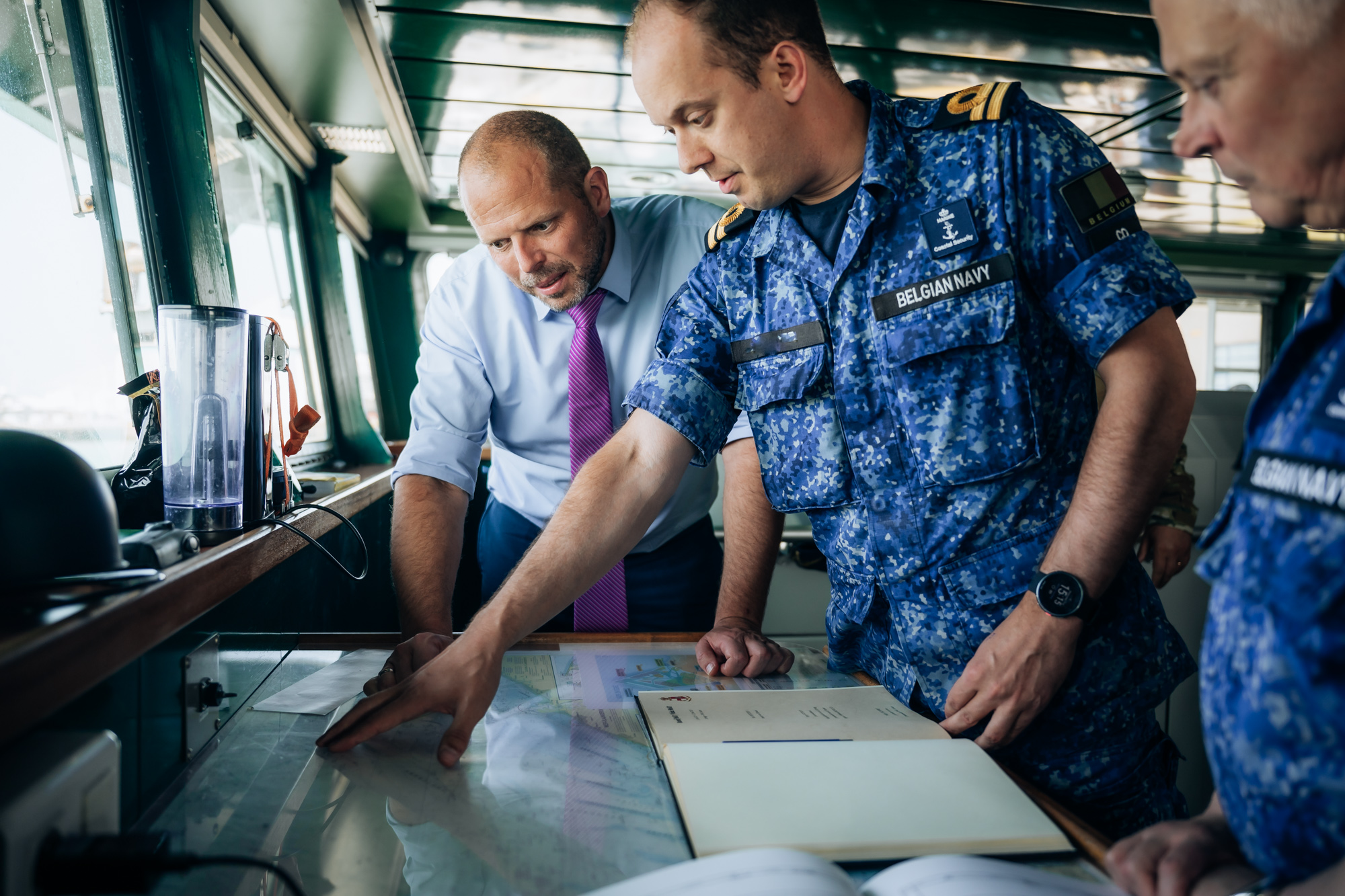 Belgian minister of Defence Theo Francken visits Belgian navy base at Zeebrugge, June 11th 2025 (source: BE Ministry of Defence)
Furthermore, the resolution highlights the need for the navy to broaden its maritime domain awareness (MDA) especially below the water surface. This can be done by improving the knowledge of the underwater environment, increasing availability of the Patrol Vessels[xi] and equip them with towed acoustic devices, use of drones, increased number of sensors on CMI and use of artificial intelligence at the MIK to analyse information. The coastguard structure is now 20 years old and needs to be updated to not only watch over the sea, but also in the water column and on the seabed. This should result into a single operational picture covering activities above and underwater and could lead to an automatic detection and identification system.
Ostend Declaration
On 24 April 2023, nine countries[xii] met in Ostend for the North Sea Summit to establish a strategy to increase and connect the offshore capacity of wind energy production in the North Sea. The summit ended by the signature of the Ostend Declaration stating that participating countries will work together within NATO and the EU to increase the security of offshore and underwater infrastructure, to protect the common interests, uphold international law and react effectively to growing traditional and hybrid threats in the North Sea. The use of the NATO framework makes the navy an essential permanent member within the NMSA and therefore the navy is present in the CMI related forums at NATO and EU[xiii]. This substantial increase in offshore capacity means for the NMSA an increase of CMI to be assessed, regulated and protected. It also gives the opportunity to increase the number of underwater sensors in the North Sea by asking it in the mitigation measures before permits are being given. The navy can have an advisory role and create the link between the industries and the critical entities for the acquisition of sensors.
For the realization of the Princess Elizabeth energy island in front of our coast, as shown on Figure 1, minimum mitigation measures asked by the NMSA could be an acoustic shield (hydrophones), radars, docking stations and cameras. It would help the navy to improve her maritime awareness and ease interventions if needed. Those requirements will be at cost of the operator but the monitoring and, if needed, the interventions would be done by the partners of the Belgian coastguard including the navy. The islands will also be connected to the Danish Energy Island[xiv] and therefore coordination with Denmark is needed regarding the measures to be taken by the operator.
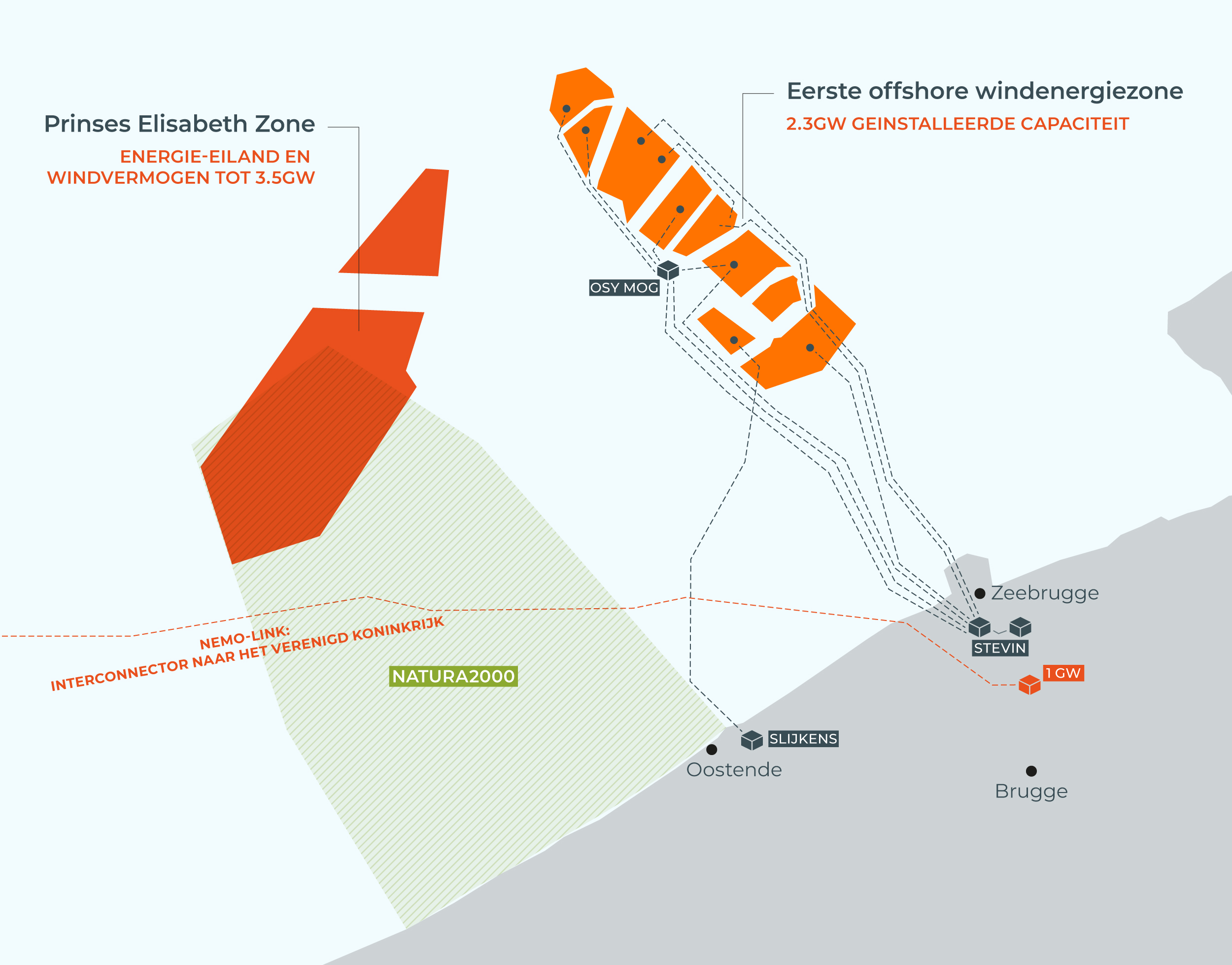 Figure 1: Princess Elisabeth Island (source: Industrie LINQS/Elia)
Role of the navy within the National Maritime Security Authority
Mandatory role of the navy
The NMSA meets at least four times a year, is led by Directorate General Shipping and seats representatives from key departments, including the National Crisis Centre, State Security Service, Administration of Customs and Excise, Office for the Coordination of Threat Assessment, Navigation Police and Ministry of Defence with representatives from the General Intelligence and Security Service (GISS) and from the Defence Joint Staff (fulfilled by the navy). It gives opportunities for the navy to give her position on regulations and on level of protection of CMI. Day-to-day operations of the NMSA, managed by the Maritime Safety Unit (MSU) of DG Shipping, include monitoring security at CMI, ports and port facilities. Where necessary, NMSA makes improvements through legislation, directives and instructions. The navy’s contribution is further expanded through its reservist officer working at the MSU and its involvement in the NATO Maritime Centre for the Security of Critical Undersea Infrastructure (NMCSCUI) [xv].
Within the North Sea countries, there is an initiative to establish (in a first phase) an encrypted web-based network for sharing information among all actors, military or not, about suspicious activities. On the military side of information sharing, NATO networks will be used instead of EU. These networks will be settled in the MIK, located in the naval base in Zeebrugge, who continuously monitors the security at sea and establish maritime awareness. The MIK is part of the Belgian coastguard that gathers 17 governmental institutions (both regional and federal)[xvi]. The MIK operators of the navy will make the link with the MOC and NATO. NATO will form the overarching security organization due to its intercontinental localization of CMI, but also because it has the means to intervene and it gives the UK (non-EU) a place at the table.
Belgian Defence Strategic Vision
In her strategic vision Plan Star[xvii] then minister of Defence Ludivine Dedonder already points out the direction to follow regarding protection of CMI. This vision is fully aligned with the national, EU and NATO recommendations: the need for capacities to protect CMI[xviii], improving interdepartmental situational awareness of the MIK by collaboration with allies and public sector like using the future offshore energy island for the installation of sensors, communication systems and docking stations for drones[xix] and the future connection of the MIK to the Common Information Sharing Environment (CISE)[xx]. In her business plan[xxi], the navy will be committed to seabed warfare:
‘The navy will provide our country with maritime capabilities capable of being deployed with short pre-warning in our Territorial Sea, our Economic Exclusive Zone (…) and to defend the vital interests of the nation and its allies at sea, in the water column, on the seabed and below.’
If providing sensors could be asked to CMI operators, the navy needs to provide options to enforce regulations and defend CMI against an actual threat.
‘The navy needs to provide options to enforce regulations and defend critical maritime infrastructure against an actual threat’
How to achieve it
Achieving it starts with a correct monitoring. A cooperation is also being investigated with Flanders Marine Institute that has already deployed acoustic sensors on the seabed to listen to sea mammals which could also be used for to detect ships. DG Shipping is going to purchase a secured 5G network to cover the whole Belgian part of the North Sea to enable communication with drones that will cover blind spots in the northern part of our EEZ[xxii] with video or radar imagery. It sends real time tracking information to the MIK. This could be part of another ongoing project. On the actual wind parks, a contract already allows the navy to have access to camera images of those installed offshore. But the main threat for these farms is assessed to be cyber.
The collected information then needs to be processed. To increase our maritime awareness, Artificial Intelligence and machine learning will be used in the near future on all received information to identify suspicious activities near areas of interests such as leisure crafts going at anchor or unusual fishing patterns. Based on threat assessment, NMSA can enforce additional areas where fishing activities will be prohibited (fishing vessels are occasionally used to gather intelligence by some nations). Temporarily forbidden areas to protect critical infrastructure are unacceptable for shipping activities. If protection is deemed necessary, to enforce an interdiction or investigate suspicious behaviours, as no other partner have assets to fulfil this task, it will be a task of the navy in coordination with other partners. For example, forcing an intruder outside a prohibited area could be a task for a patrol vessel.
 'Neutralizing the effectiveness of sabotage is an efficient deterrent strategy', (photo: offshore windfarm and substation, Shutterstock | 2465474755)
Through collaborative dialogue with the defence Industry, the navy can explore and develop alternatives to patrol vessels, offering innovative and effective solutions. Seabed warfare was introduced at the European Defence Agency (EDA) in 2020. With the upcoming revision of its Capability Development Plan[xxiii], EDA will develop interconnected capabilities and explore key technologies required to manage maritime unmanned drone swarms and to protect critical seabed infrastructure.[xxiv] This could give indications for the Belgian defence industry and for minimum requirements of future CMI. Not only underwater drones will be needed for surveillance but also air drones. This would be the quickest way to investigate suspicious behaviour and collect data. With the replacement of the coastguard aircraft, the acquisition of drones should be considered as well.
Neutralizing the effectiveness of sabotage is an efficient deterrent strategy. Consequently, redundancy will be imposed for energy cables as a mitigation measure (also opted for the Princess Elizabeth energy island) whereas for pipelines this is unaffordable. Instead, the resilience of the Belgian pipeline network is fortified through a robust system of interconnections, an area where Belgium particularly excels[xxv]. In the realm of communication cables, redundancy is already a standard practice. The network can reconfigure itself in milliseconds, switching to alternate cables if necessary. However, limitations remain. As depicted in figure 3, should seven key cables be severed, Belgium could face partial isolation from the global network, resulting in significant economic and societal impacts. To further mitigate risks, future cables will be buried deeper, enhancing their protection against potential threats.
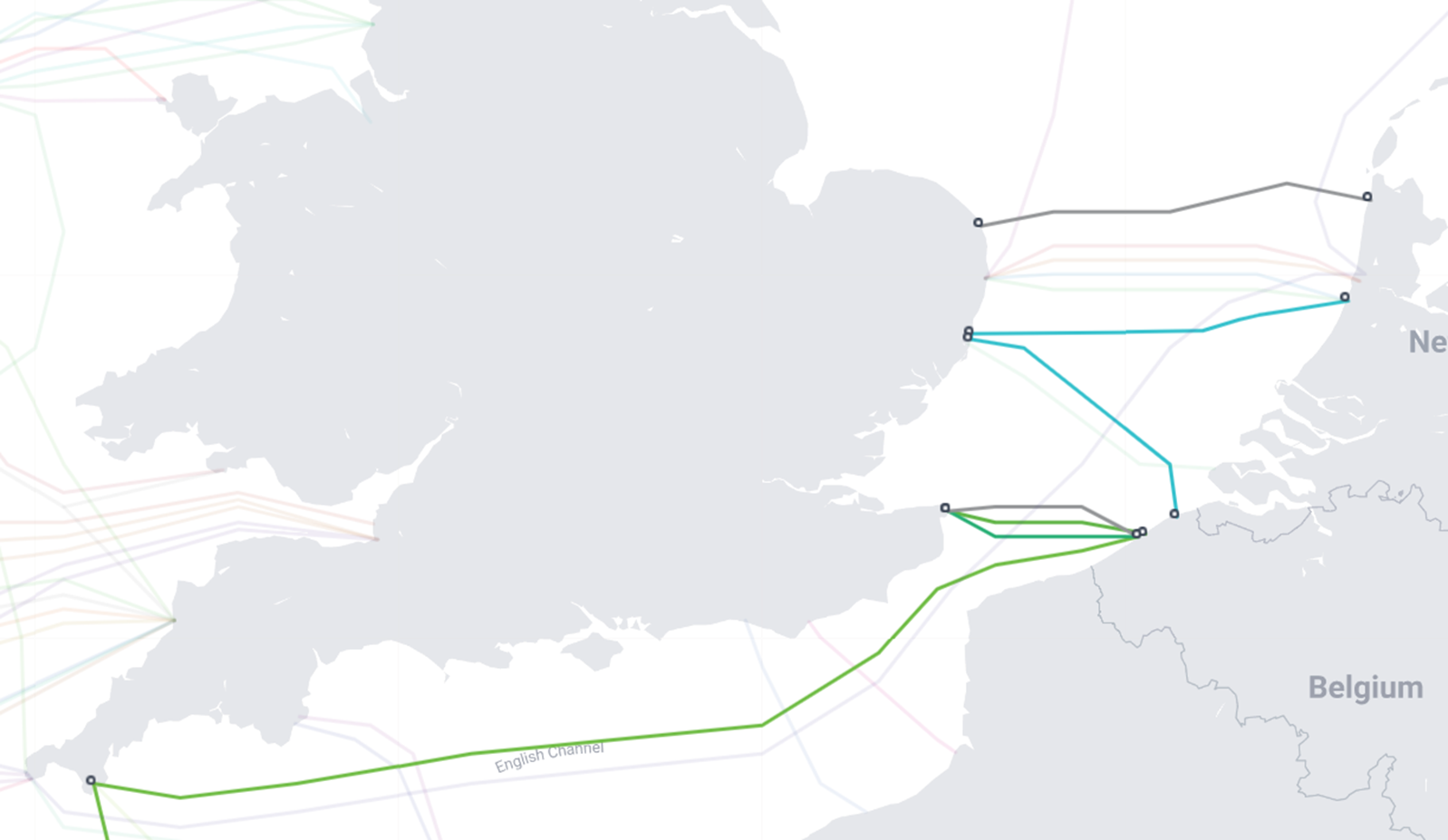 Figure 3: the seven vital communication cables of Belgium (source: submarinecablemap.com)
When suspicious behaviour is detected, like a vessel stopping on top of CMI, an inspection of the CMI is needed. NMSA may therefore increase the frequency of seabed scans using side-scan sonar on civilian vessels, beyond the usual annual schedule. The navy could help identifying objects during those surveys and, if needed, neutralize it at later stage. The navy's new MCMVs, equipped with advanced toolboxes and underwater robotics, are ideal for this purpose, functioning effectively up to 300 meters deep.[xxvi] For deeper CMI beyond the North Sea, Belgium's navy focuses on conventional anti-submarine warfare, relying on NATO and EU allies, like France[xxvii] and the UK[xxviii], who are developing capabilities for greater depths.
Challenges facing disruption
A physical intervention to protect the CMI might still be needed. Those measures can only be taken in strict compliance with the law. While such measures can easily be envisaged and implemented in the territorial sea, where the coastal state enjoys almost total sovereignty. It suffers limitations in the EEZ, where, as UNCLOS[xxix] stipulates, the coastal state's sovereign rights are more restricted. For example, Belgian jurisdictional powers do not extend to cables and pipelines located beyond the territorial sea, except for those ‘installed or used in connection with the exploration of its continental shelf or the exploitation of its resources, or the exploitation of artificial islands, installations or structures under its jurisdiction’[xxx], and/or in the event of an incident resulting in environmental damage.[xxxi]
The Belgian Maritime Code (2020) is setting up regulations within the limits of the sovereign rights. An adaptation of the international laws to protect all CMI outside the territorial sea is needed and is a priority of DG Shipping. A robust legislation has a deterring effect on potential aggressors. In the event of CMI disruption, our National Crisis Centre will take the lead in coordinating response efforts on land, while the navy is likely to lead operations at sea, providing resources and expertise on-site. Should there be any casualties or pollution, these incidents will be addressed through the activation of the national contingency plan, under the guidance of the Governor of West Flanders. The effectiveness of this coordinated approach also hinges on regular training that involves all partners. The EU mandates annual training exercises: a standard Belgium has already met with exercises like COASTEX 2023.
 Repair drone for underwater infrastructure, Saab Sabertooth (source: SAAB)
In the event of disruption, the resilience of CMI is crucial. Unfortunately, the availability of repair resources is notably limited. Gas pipeline repairs, for instance, can take from two months to two years, depending on the severity of the damage, weather conditions, and the availability of the three specialized EU repair ships.[xxxii] It may be prudent for the NMSA to advocate for investment in additional repair vessels as part of the EUMSS. While repair ships for communication cables are more accessible, their repairs could still require up to six weeks. Another challenge for the resilience is the scarcity of spare parts. Operators might consider this in their security plans, including expedited repair methods such as drones as a mitigative measure.
‘While repair ships for communication cables are more accessible, their repairs could still require up to six weeks’
Considering these challenges, particularly in the context of repair capabilities and the use of advanced technologies like drones, the Belgian navy's participation in the EU Critical Seabed Infrastructure Protection (CSIP) project under PESCO becomes increasingly relevant.[xxxiii] This involvement would not only leverage the navy's expertise in mine and seabed warfare but also ensure its awareness of the latest technological advancements. Such a move would be perfectly aligned with the Defence, Industry, and Research Strategy[xxxiv].
At last, a development of Offensive Seabed Warfare capability able to target a potential enemy’s CMI should be considered as an effective mean of conventional deterrence. The capability would include information gathering on CMI and could also be part of our future mining capacity or special operations technics. This would need further reflection on the wanted and consecutives effects of such attacks.
Conclusions
Our modern Sea Lines of Communications, running on the seabed through cables and pipelines, are put at risk within the current geopolitical situation and the growing accessibility of technologies like underwater drones. The new Maritime Security Law provides an enhanced legal framework to protect them and, among other things, reinforces the role of the NMSA. The navy is and will remain a key permanent member within the NMSA taking part in the decision-making process, providing guidance on securing CMI, and helping with risk assessments.
Through NMSA risk assessment of critical entities, operators can be forced to provide enough sensors to detect threats to their CMI and increase their resilience. This will improve the MDA of the navy and set the most favourable conditions for when the MIK will task its Coastal Security and Harbour Protection capability on a real threat. The security of CMI requests innovative technologies that must be developed in dialogue with civilian operators, defence industry and within the framework of NATO, EU or bilateral cooperation. To effectively fulfil its responsibilities within the NMSA, the navy needs to sustain expertise within the Defence Staff and actively participate in NATO and EU forums focused on CMI. This expertise is cultivated not only through reserve officers but also within its specialized Coastal Security and Harbour Protection units.
After a full career in operations, Commander GS Gaëtan Motmans (Belgian Navy) was appointed head of the Maritime Operations department at the Defence College in Brussels, where he teaches at the Advanced Staff Course.

Notes
[i] “The first British action against Imperial Germany at the start of the First World War was to cut the German undersea communication cables. This forced Germany to use British cables for its overseas communications and allowed London to read German cable traffic throughout the war.” NATO Science and Technology Committee. “Protecting Critical Maritime Infrastructure – The Role of Technology,” August 8, 2023.
[ii] 4.6km of a Norwegian sensor cable network (9.5 tons) has been cut and dragged away on 03 April 2021 at a depth of around 250m. ‘Surveillance Cables Mysteriously Cut’. Norway’s News in English — Www.Newsinenglish.No (blog), 7 November 2021. https://www.newsinenglish.no/2021/11/07/surveillance-cables-mysteriously-cut/.
[iii] European Parliament. Directive (EU) 2022/2557 of the European Parliament and of the Council of 14 December 2022 on the Resilience of Critical Entities and Repealing Council Directive 2008/114/EC (Text with EEA Relevance), 2022. https://eur-lex.europa.eu/legal-content/EN/TXT/?uri=celex%3A32022L2557.
[iv] European Parliament. Directive (EU) 2022/2555 of the European Parliament and of the Council of 14 December 2022 on Measures for a High Common Level of Cybersecurity across the Union, Amending Regulation (EU) No 910/2014 and Directive (EU) 2018/1972, and Repealing Directive (EU) 2016/1148 (NIS 2 Directive), 2022. https://eur-lex.europa.eu/eli/dir/2022/2555.
[v] MS will use the list of essential services stated in the directive to carry out risk assessments and to then identify, not later than 17th July 2026, all their critical entities.
[vi] High Representative of the Union for Foreign Affairs and Security Policy. JOINT COMMUNICATION TO THE EUROPEAN PARLIAMENT AND THE COUNCIL on the Update of the EU Maritime Security Strategy and Its Action Plan « An Enhanced EU Maritime Security Strategy for Evolving Maritime Threats », 2023. https://oceans-and-fisheries.ec.europa.eu/system/files/2023-03/join-2023-8_en.pdf. P4
[vii] SERVICE PUBLIC FEDERAL Mobilité et transport. ‘Arrêté Royal Concernant La Sûreté Maritime’, 4 June 2023. https://www.ejustice.just.fgov.be/doc/rech_f.htm.
[viii] Main focus of this Law is to enhance the security of Belgian ports and port facilities. Another new competence of the NMSA is to change ISPS levels for BEL flagged ships.
[ix] SERVICE PUBLIC FEDERAL Mobilité et transport. ‘Arrêté Royal Concernant La Sûreté Maritime’, 4 June 2023. https://www.ejustice.just.fgov.be/doc/rech_f.htm.
[x] Peter Buysrogge. ‘Chambre Des Représentants de Belgique, PROPOSITION DE RÉSOLUTION 3228/001 Concernant l’extension de Notre Espace Maritime Aux Fonds Marins En Vue de Protéger Notre Infrastructure Sous-Marine Critique’. Chambre des représentants de Belgique, 15 March 2023. https://www.dekamer.be/FLWB/PDF/55/3228/55K3228001.pdf
[xi] A third Coastal Patrol Vessel should be delivered by Oct 25
[xii] Belgium, Denmark, France, Germany, Ireland, Luxembourg, Netherlands, Norway, and United Kingdom
[xiii] This a task of the Navy representant at the Belgian Defense Integrated Capability Management staff. A NATO-EU Task Force on Resilience of Critical Infrastructure was launched together with a Critical Undersea Infrastructure Coordination Cell at NATO Headquarters to improve information sharing and exchange best practices between Allies, partners, and the private sector. NATO's Science and Technology Organization is working on developing technologies to protect CMI as well.
[xiv] « North Sea Energy Island Can Make Denmark and Belgium Electricity Neighbours ». Accessed 7 December 2023. https://en.energinet.dk/about-our-news/news/2021/02/12/elia-pr/.
[xv] NMCSCUI would be a staff of 6 to 8 officers within the NATO Shipping center (Northwood). Njall Trausti FRIDBERTSSON. ‘NATO PA: Protecting Critical Maritime Infrastructure – The Role Of Technology. 032 STC 23 E Rev.2 Fin’. NATO PA, 7 October 2023. https://www.nato-pa.int/document/2023-critical-maritime-infrastructure-report-fridbertsson-032-stc.
[xvi] KWGC. ‘Goal’. Coast guard, 12 January 2021. https://kwgc.be/en/content/goal.
[xvii] Minister of Defence. Plan STAR, 2022.
[xviii] Ibid, 38
[xix] Areal, Surface and Underwater. Ibid, 121
[xx] Ibid,122
[xxi] Belgian Navy. Business Plan Marine 2023 – 2026, n.d.
[xxii] A Research project concerning an unmanned surface vessel is currently ongoing at the Royal Military Academy
[xxiii] It will be on the lessons learnt from Russia’s military aggression against Ukraine.
[xxiv] High Representative of the Union for Foreign Affairs and Security Policy. JOINT COMMUNICATION TO THE EUROPEAN PARLIAMENT AND THE COUNCIL on the Update of the EU Maritime Security Strategy and Its Action Plan ‘An Enhanced EU Maritime Security Strategy for Evolving Maritime Threats’, 2023. https://oceans-and-fisheries.ec.europa.eu/system/files/2023-03/join-2023-8_en.pdf.
[xxv] ‘Pierre - 2019 - Preventive Action Plan Belgium.Pdf’. Accessed 28 September 2023. https://economie.fgov.be/sites/default/files/Files/Energy/Preventive-Action-Plan-Belgium-Gas-Supply.pdf.
[xxvi] Lieutenant-Colonel (NER) Boubacar HAMANI, Korvetkapitein Vincent VAN HAESENDONCK, Majoor Vlieger Steven VAN DER VORST, and Major Nicolas BOUTET. The Use of the Future rMCM Capability as a Joint Enabler (Strategic Advisory Paper), 2023.
[xxvii] Machi, Vivienne. ‘French Military Tees up New Tech in Rush to Conquer the Seabed’. Defense News, 14 February 2022. https://www.defensenews.com/global/europe/2022/02/14/french-military-tees-up-new-tech-in-rush-to-conquer-the-seabed/.
[xxviii] Chuter, Andrew. ‘UK Military Ups Investments in Undersea Surveillance’. Defense News, 16 November 2022. https://www.defensenews.com/global/europe/2022/11/16/uk-military-ups-investments-in-undersea-surveillance/.
[xxix] United Nations Convention on the Law of the Sea (UNCLOS) is the Law of the Sea convention of the United Nations (Montego Bay, 1982).
[xxx] UNCLOS, art. 79§4
[xxxi] UNCLOS, art. 56
[xxxii] ‘Atlantic Cable Maintenance & Repair Agreement (ACMA)’. Accessed 17 October 2023. https://www.acma2017.com/.
[xxxiii]Harmonisation of requirements will run until 2024 with a possible agreement on a common procurement foreseen in 2028. ‘[NEW] Critical Seabed Infrastructure Protection (CSIP) | PESCO’. Accessed 22 October 2023. https://www.pesco.europa.eu/project/critical-seabed-infrastructure-protection-csip/.
[xxxiv] RHID. Development and Consolidation of a Performant Belgian Defence Technological and Industrial Base., 2022. https://www.defence-institute.be/wp-content/uploads/2022/10/dirs-en.pdf.
Gerelateerd
Tri-marines: vertrouwde en interoperabele partners op het slagveld
Het Korps Mariniers kent een lange geschiedenis en voelt een sterke verbintenis met amfibische families bestaande uit vele bevriende…

The future of Transatlantic relations
In the coming years, the key in the transatlantic relations lies to sail as close to the wind as possible between total commitment and…
Europe's Maritime Challenges Examined
From 6 to 8 April 2025, fourteen international academics and naval professionals gathered in Rotterdam to examine the strategic challenges…