The Future of Transatlantic Relations
Three scenarios for NATO's survival
Abstract
The future of transatlantic relations hangs in the balance. Driven by geopolitical shifts, a changing US foreign policy, and escalating tensions over the Iran war, NATO faces its most fundamental crisis since its founding in 1949. This analysis by Associate Professor Roy de Ruiter explores three scenarios: a return to the pre-Trump status quo, a reset of the alliance on new, more balanced terms, or a permanent split between the United States and Europe. Each scenario carries profound consequences for Western security and prosperity. One conclusion is clear: nostalgia is not a strategy, and Europe must prepare for all three.
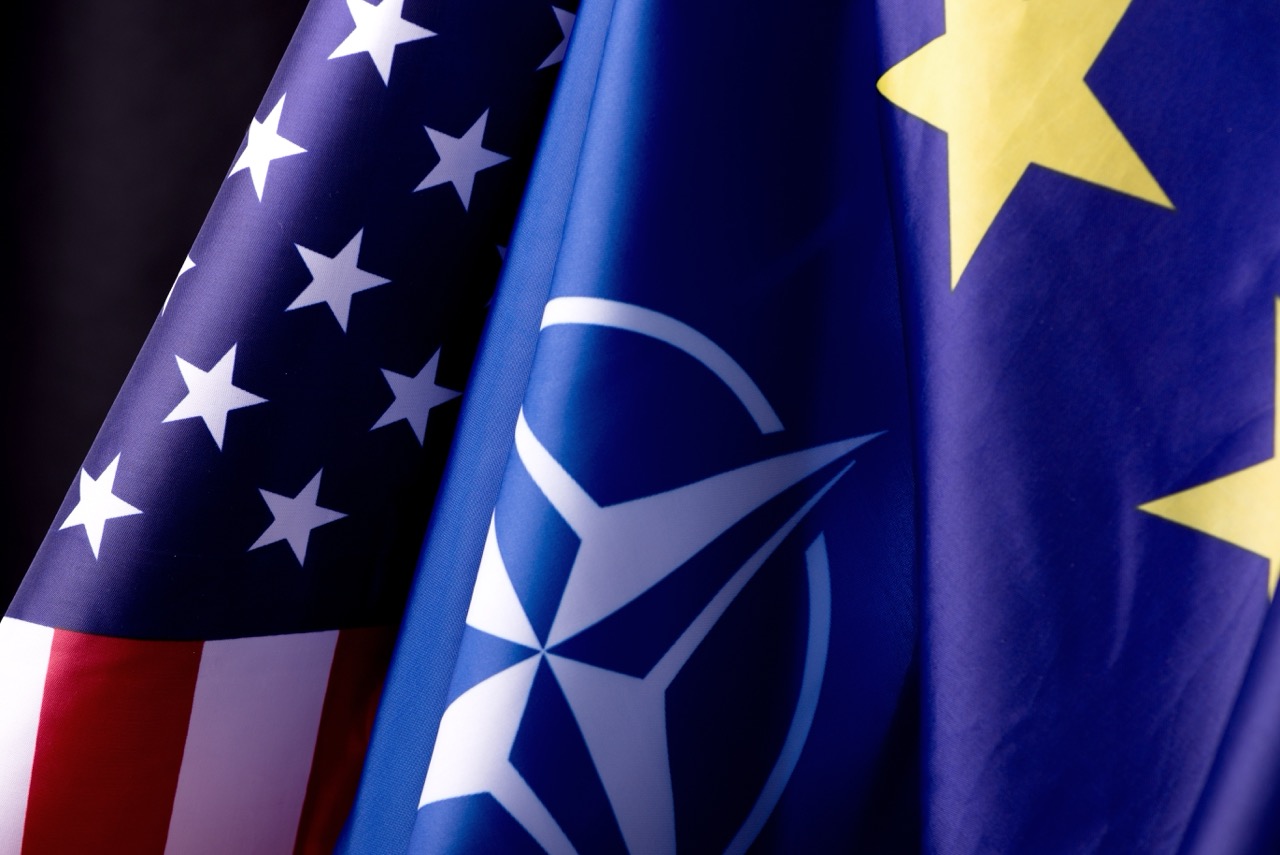 Photo: A. Ayebetova | Shutterstock
Preface
This article will explore the future of the transatlantic relations, more specifically the future of NATO. The analysis is based on three scenarios. They are not meant to be predictions. The future is unpredictable. The purpose is to imagine what could happen, to be prepared when it does happen. The focus will be on geopolitics. However, it would be a mistake to consider this analysis as conceptual, academic, or strategic. Geopolitics change tactics as well.1 It defines why we fight, the way we fight, the means available, where we fight, and who is on our side.
Two sides of the Atlantic drifting apart
Since 1492, the Atlantic Ocean has connected the Americas and Europe. It links people and trade and facilitates communications. More than 99 percent of transatlantic data pass through transatlantic cables. From financial transactions to scientific research, from streaming services to cloud computing.2 It is commerce that really binds both sides of the pond together. The transatlantic economy – worth 7.5 trillion dollars last year – continues to thrive in a competitive and disruptive age.3
Although the threat to NATO posed by Russia – and before the Soviet Union – is primarily of a continental nature, the maritime domain is key to success in a land war. NATO stands little chance without American and Canadian reinforcements if it fails to contain Russia's strategic maritime capabilities.
After the end of the Cold War the two sides of the Atlantic slowly deviated in their definition of their interests and security threats. For the US, the centrality of the European project has faded in strategic relevance. There are other priorities to consider, such as presidents Obama's 'Pivot to Asia'. These developments have opened a drift that has led to a gradual disengagement of the US. Meanwhile, the European military expenditure quickly declined.456
Disdain of Europe, shown by the second Trump administration, the split between both sides of the Atlantic Ocean has only further increased.7 The president repeatedly bashed Europe as weak and in decay, even arguing that the EU is a direct threat to the economic interests of the US.8 His National Security Strategy formalised this point of view when it pointed to the EU as the main threat to democracy.
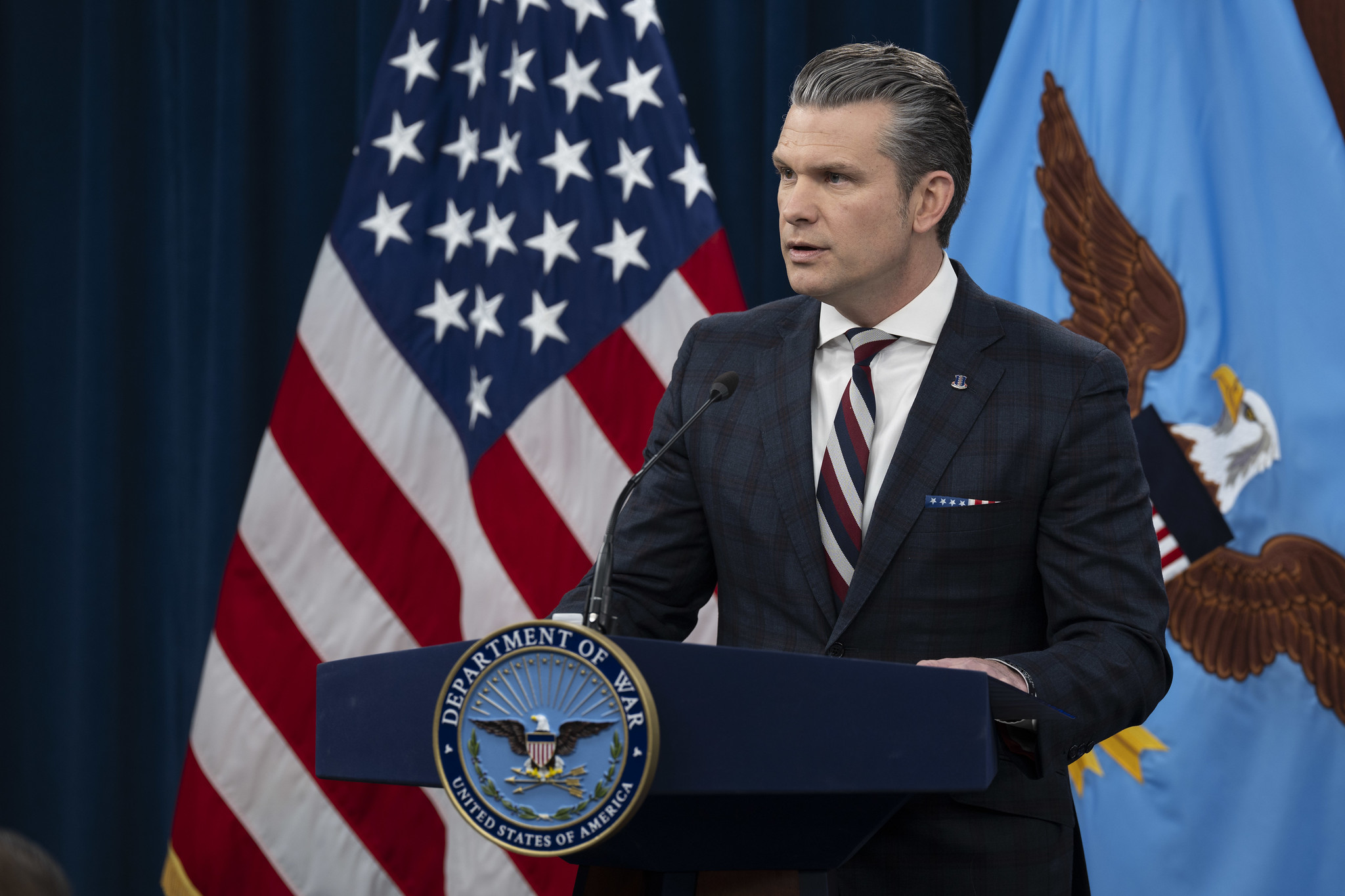 Secretary of War Pete Hegseth conducts a press briefing on Operation Epic Fury at the Pentagon, March 4, 2026 (DoW photo by U.S. Navy Petty Officer 1st Class Alexander Kubitza)
Then, President Donald Trump decided to attack Iran. Teheran demonstrated to be a worthy opponent. The Iranian regime seems to hold some strong cards at this moment with its control over the Strait of Hormuz. It made some analysts even wonder if this is America's Suez crisis, referring to the fiasco of the UK and French in the Middle East in the 1950s.9
Trump asked and later demanded assistance from its European allies. The old continent has so far declined. It was uninformed about the war, which it did not want. Furthermore, it is suffering the consequences of the crisis and has strong doubts about its legality. Nonetheless, it already must deal with a devastating conflict on its doorstep. Trump's frustration with its European allies has led him to announce that he was 'absolutely' considering quitting the NATO alliance – a paper tiger in his words, in fact he suggested he already made his decision.10 Additionally, Secretary of War Peter Hegseth declined to reaffirm US commitment to the collective defence of NATO. Consequently, he undermined the concept at the heart of the alliance.11
This crisis is fundamentally different, because it comes from within.
The divergence within NATO is approaching a breaking point. Some even warn that the transatlantic relation is becoming toxic for Europe, with the risk of being dragged into a dangerous and unnecessary war.12 To be sure, there have been many crises in the transatlantic alliance over the past 80 years, and some seemed existential at the time. However, this crisis is fundamentally different, because it comes from within. Are the United States – founder, leader, and nuclear guardian of the alliance – still committed to Europe's security? Furthermore, U.S. domestic political volatility seems to be a structural condition. Making the anti-European posture not a one-off aberration.
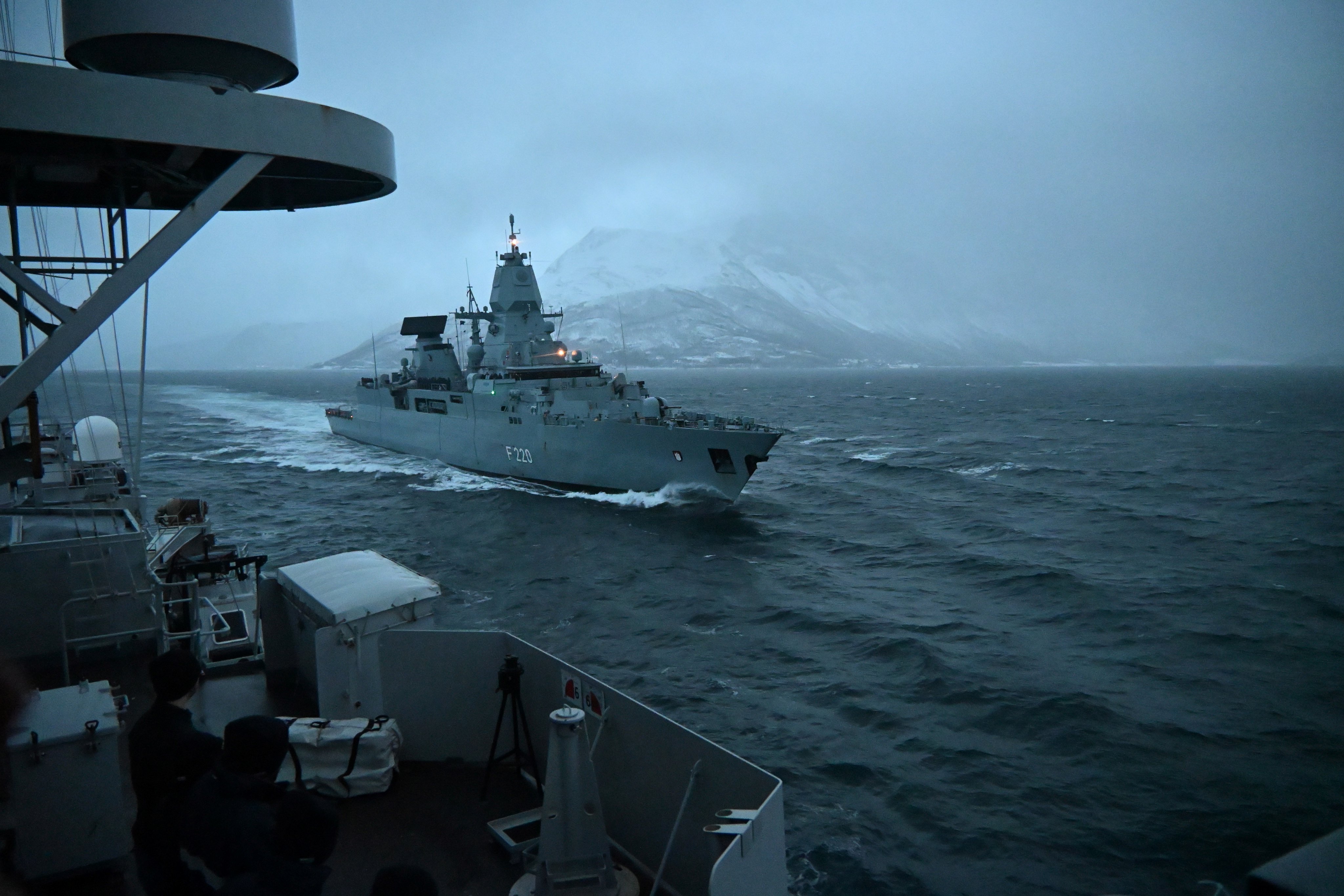 Europe must consider the absence of NATO. With the American threat to Greenland in mind, it must even consider the safety of its rear. Photo: German Sachsen-class frigate Hamburg during operations of Standing NATO Maritime Group 1 in the Baltic (NL Mediacenter Defense)
These are fundamental questions, especially in a world affected by difficult challenges, such as climate change, great power competition, and the rise of revolutionary technology. Developments that will all have a major impact on the Atlantic world. Consequently, Europe must consider the absence of NATO. With the American threat to Greenland in mind, it must even consider the safety of its rear.
Scenario 1: Back to the old days
The first scenario is the hope scenario. The hope is that the Democratic Party wins the mid-term elections in November and that this election strengthens the position of more moderate voices in both parties. In military circles, hope is also based on the enduring good relations between the European and American armed forces. Decades of working and fighting together has formed strong bonds of trust and understanding. The underlying assumption is that if only the political wind changes, everything will return to normal.
'Nostalgia is not a strategy' - Mark Carney
Of course, trust must be restored. This will take time, but it has been done before, in 2021. When President Joe Biden became after Trump's first tenure, he reassured allies that US foreign policy was back to normal. In this tradition the potential Democratic presidential candidate Gavin Newsom told European leaders at the recent Munich Security Conference that Trump is temporary and will be gone in three years.13
Canadian Prime Minister Mark Carney does not believe in this scenario. At the last World Economic Forum he warned against hope: 'We know the old order is not coming back. […] Nostalgia is not a strategy.'14
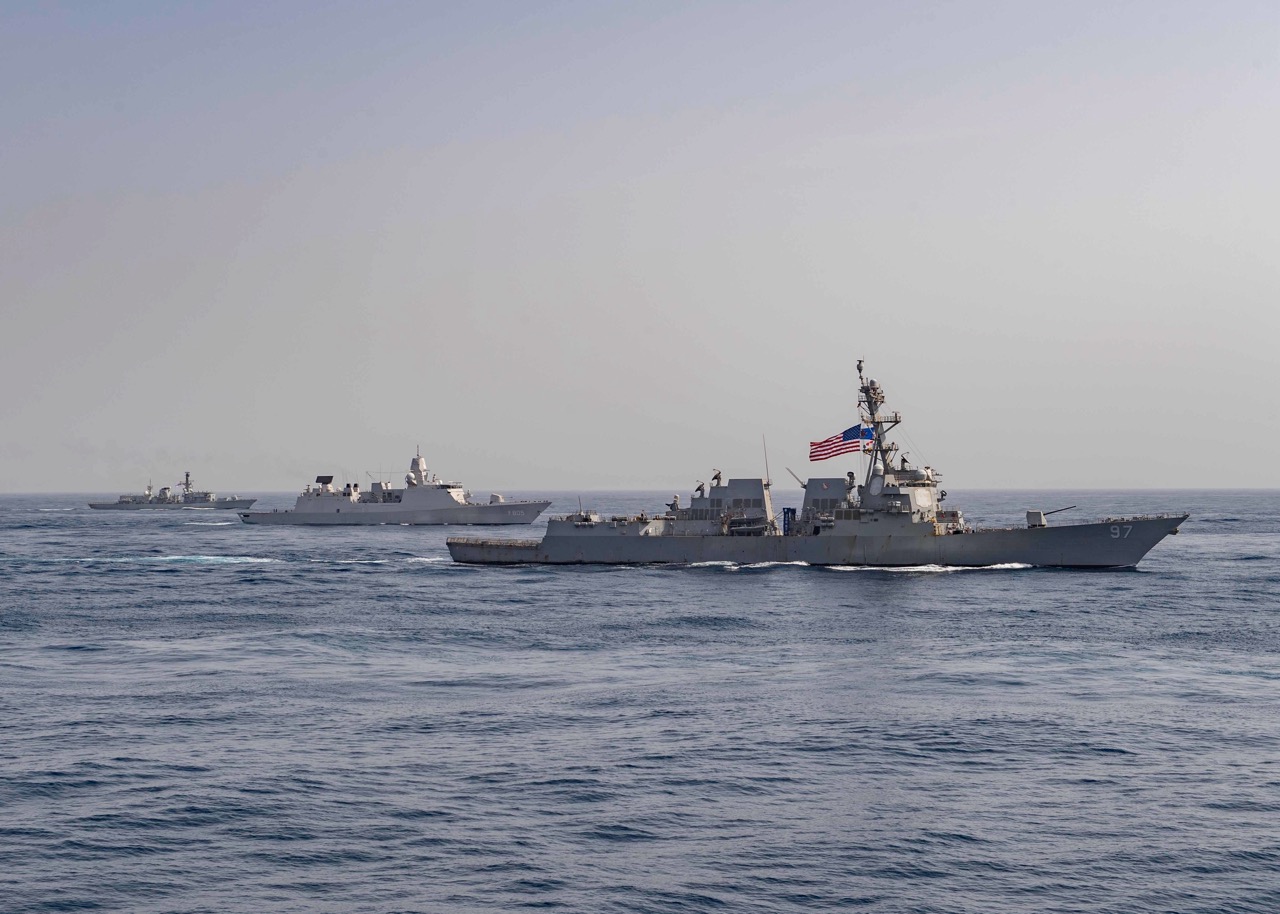 Are the US still committed to Europe's security? Photo: HNLMS Evertsen and USS Halsey during exercises in the Gulf of Aden, 2021 (U.S. Navy photo by Mass Communication Specialist 3rd Class Adames)
Scenario 2: A restart of NATO
The premise of the second scenario is a restart of NATO. This will require some serious relation therapy and can only be successful if both parts of the Atlantic Ocean conclude that they are better off together. After 80 years, every relationship suffers from ingrained patterns. Moreover, the world has changed fundamentally since the allies came together. The US is no longer the military and economic superpower it was after World War II and unlike its rivalry with the Soviet Union, they could be surpassed by China.
And Europe? It has risen from the ashes of the war to become one of the wealthiest and happiest places on earth. To be honest, this occurred under the protection, support, and guidance of the US. Remember, it was Washington, with its Marshall plan, who stimulated European integration and provided decisive support for Germany's reunification. New arrangements and modus operandi are necessary to continue the relationship in a more harmonious and balanced manner. Europe must bear a greater financial and military burden. This will be a burden for society for an extended time. Also, because in a multi-polar world, Europe must be able to protect its own interest outside the context of NATO.
In a multi-polar world, Europe must be able to protect its own interest outside the context of NATO.
The US must (re)confirm its commitment to European security. Effective deterrence only works if its credible. It will have to station a considerable number of conventional troops in Europe, and above all, Washington must make clear that the US nuclear umbrella – the ultimate deterrent to Russian aggression – remains in place. The United States will lose some of its advantages derived from the asymmetric nature of the current alliance. It will no longer be as dominant as it has been since 1949. Furthermore, Europe must find a way to keep the US constructively engaged. Alliances function best when the threat perceptions of member states are aligned. This is not the case at this moment. For Europe Russia is an existential threat, but for the US it is a regional problem. Washington worries about China.
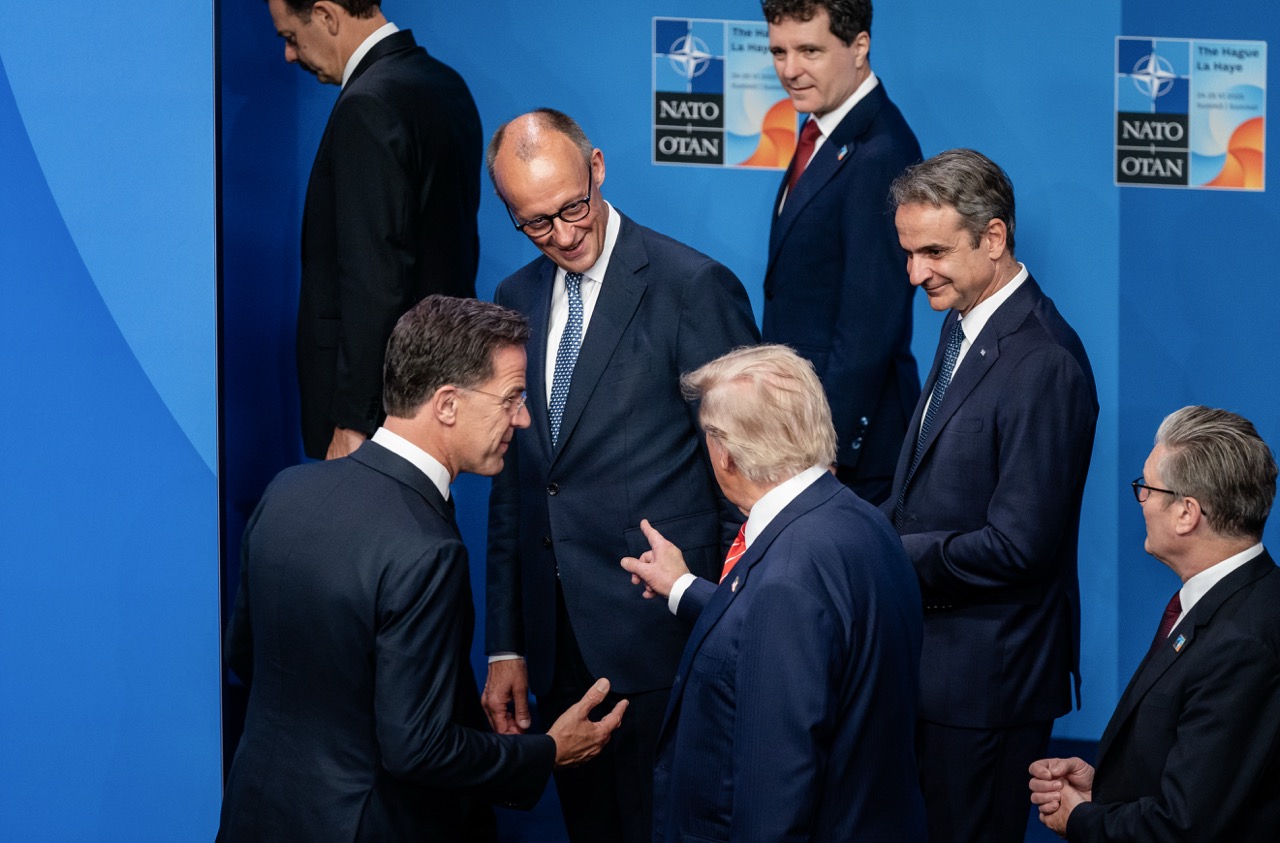 NATO chief Mark Rutte welcomes world leaders to the NATO-summit in The Hague, june 2025. German Chancelor Mertz and U.S. President Trump, seen joking here, since have crossed swords more than once (photo: M. Braak | NL Ministry of Foreign Affairs)
It is essential that NATO find a way to serve US security interest as well. Otherwise, it will inevitably lead to a new split. A possible solution is to update Article 6 of the North Atlantic Treaty and extend the 'area of responsibility' to the US territories in the Indo-Pacific. NATO helps Washington to deter or, in the worst case, to survive a war with China.15 The new arrangements will only work if both sides of the Atlantic accept this new balance. Like the previous scenario, the restoration of NATO will take time.
Scenario 3: A divided West
In the last scenario the restoration failed. The Atlantic World and NATO fall apart. Ten years ago, this scenario was almost unimaginable. At the time, the trans-Atlantic relation was relatively solid. Of course, there were moments of tensions, the American invasion of Iraq and successive American presidents complained about the lack of European defence spending. However, both parts of the Atlantic understood that they had more to win than to lose. As long as, European countries remained loyal and supported the US in for example Afghanistan the existence of NATO could be taken for granted.
This has changed radically with President Trump back on the throne. In his first term, he had already come close to leaving NATO, only to be talked out of it by his advisors. This time, his inner circle is on the same page as the President. There is enough evidence from the escalating set of political, military, and economic crises under his second administration to take its hostility towards its NATO allies seriously. The signs are all over the wall. Examples are the leaked signal messages by Secretary of War Hegseth, calling the European Union pathetic. Vice-president Vance's speech at the Security Conference in Munich, where he argued that Europe's principal danger came from within, instead of Russia and China. The gradual disengagement of the US from NATO. For example, in the last NATO defence ministerial, Hegseth delegated the American representation to the number three civilian leader in the Pentagon. On the military side, Commands previously led by American admirals and generals are now commanded by European officers.16
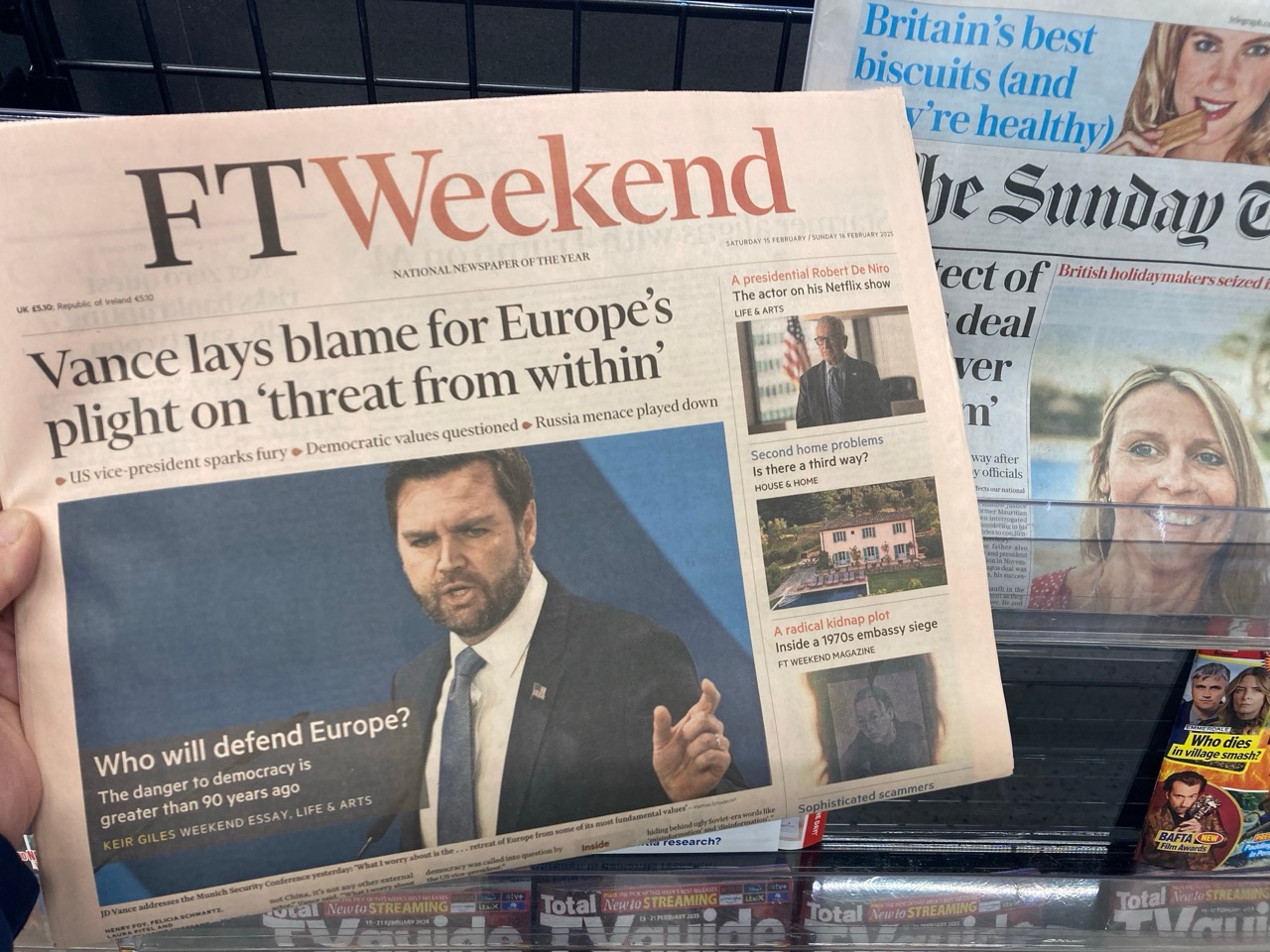 US vice-president J.D. Vance argues Europe's principal threat comes from within (photo: Shutterstock | 2586476825)
The most dramatic incident are the American threats to another ally about Greenland. The crisis jeopardised NATO's cohesion and one of its core tasks – signalling a credible deterrence.17 Furthermore, one of NATO's greatest strengths lies in military integration and intelligence sharing across 32 members. These core capabilities are seriously damaged now that allies are starting to view the United States as a security threat – as Denmark does.
Of course, Trump must go to Congress to formalise a decision to leave NATO, and this will require the backing of two-thirds of the Senate. But does it matter as the credibility of NATO's essential capabilities to win the fight, and its nuclear deterrence are in doubt? Even when Trump is not allowed to abandon NATO, he can make life difficult from within. For example, by refusing to pay its dues to NATO's common budget, 15 percent of the total. And less extreme, he can stop participating in NATO's planning process. This would effectively freeze NATO's war preparations.18
The cost of a break-up would be devastating.
The costs of a break-up would be devastating. For clarity, for both parts of the Atlantic Ocean. It will severely harm the most successful geoeconomic base and destroy the strongest world's military alliance. Militarily, if this scenario unfolds, Europe will face serious problems. It urgently needs to develop and deploy essential systems, all of which now provided by the US. It must build a credible nuclear deterrence and replace the NATO's command and planning structure. Expand Europe's defence industry. This will take time and require enormous investments.
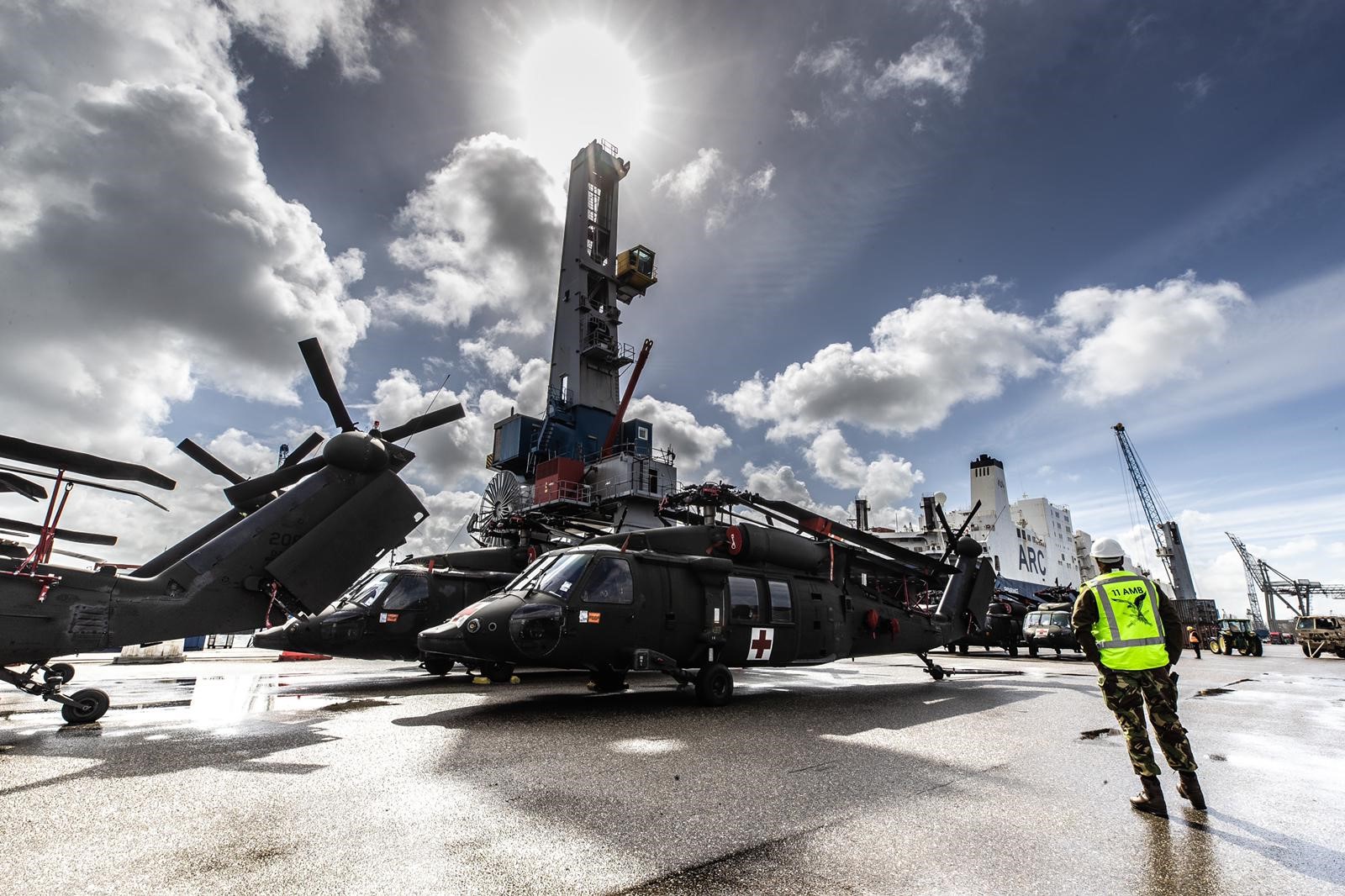 Units of the American 101st Airborne Divison move through Europe via NATO's Host Nation Support, Rotterdam Harbour, 2023 (photo: NL Ministry of Defense)
Additionally, with a break-up in the Atlantic World, the US and Europe presumably will not cooperate in other parts of the world either. Therefore, Europe must also secure its interests in the rest of the world. This will only work if European countries, with all their different interests, perceptions of threat and unstable governments, remain united and prepared to carry this enormous burden. However, so far European allies have shown that they can. They seem to realise that this time, Trump is serious. They raised their defence budgets, funded the Ukrainian war effort, bought American weapons for Kiev, and flattered the president using their kings and queens, palaces and parades.
Conclusion
'Events, my dear boy, events', said the former UK Prime Minster Harold Macmillan when he was asked what troubled him most. Current events in the Middle East can accelerate drift and transform the Atlantic Ocean into a barrier. It led European allies, understandably, to close their airspace and refuse to support the US in the war with Iran. In return, a frustrated Trump told The Telegraph that pulling out of NATO was already '(…) beyond reconsideration'.19 This scenario would have a devastating impact on the security and prosperity of the Atlantic World. Therefore, European states must walk a thin line between flattering and sometimes supporting the Trump administration, while in the meantime strengthen its strategic autonomy.
One does not necessarily preclude the others. Most priorities and urgency set by NATO in for example precision strike, Anti-Submarine Warfare, Mine Warfare, and emerging and disruptive technologies, serve both ambitions. The same applies to the increased cooperation between European NATO-allies, like the French and Dutch navies. Meanwhile the military-to-military relations within NATO remain good. The real challenge will probably be political. More autonomy will also mean buying less American equipment, even if it is more advanced. This could cause friction, especially with the transactional minded Trump administration.20
 American troops during the opening ceremony of the German 45th Armored Brigade in the old town of Vilnius, Lithuania May 22, 2026 (photo: Shutterstock | 2637580007)
While a break-up is no longer unimaginable, NATO is not doomed. The alliance has survived existential crises before. For both sides of the ocean, the Alliance is still a highly valuable institution worth fighting for. However, considering the two more positive scenarios, it is safe to conclude that things will have to change. The world order has fundamentally changed since 1949 and 1989. And Trump is not the first to complain that European allies need to do more on defence.
Unfortunately, a restart of NATO offers no guarantees. It will take years to restore trust and credibility. In addition, it will require political stability on both sides of the Atlantic. The US is a deeply divided country with major structural problems; such has its enormous debt and inequality. Restoring relations also carries political costs. A persistent minority of the American population approves of the current administration's foreign policy approach.21 Europe has its own challenges with its relative decline in a multi-polar world and the rise of populist and even extreme right parties.
While a break-up is no longer unimaginable, NATO is not doomed.
In the coming years, the key in the transatlantic relations lies to sail as close to the wind as possible between total commitment and complete withdrawal, while avoiding false or unnecessary divisions. Simultaneously, NATO must make new arrangements that serve the interests of all member states and recalibrates the alliance to a world that is rapidly becoming multipolar and in which economic, technological, and military power is more diffuse.
The transatlantic community continues to share vital strategic and economic interests, norms, values, history, and culture, making close cooperation not only logical, but also essential for its security and prosperity. Whether this path will materialise remains to be seen, but exploring possible scenarios will help to navigate through the uncharted waters of the future.
CAPT Royal Netherlands Navy dr. Roy de Ruiter is Associate Professor of Maritime Strategy at the Netherlands Defence Academy. This article is an adaptation of his lecture at the KVMO Seapower Symposion on 15 april 2026.

Noten
1 Wayne P. Hughes and Robert Girrier, Fleet tactics and naval operations, Third edition ed. (Annapolis, Maryland: Naval Institute Press, 2018), http://www.vlebooks.com/vleweb/product/openreader?id=none&isbn=9781682474860, 1 online resource (xxxvi, 370 pages) : illustrations, maps.
2 Daniel S. Hamilton and Joseph P. Quinlan, The Transatlantic Economy 2026, Foreign Policy Institute, Washington, 2026, https://www.uschamber.com/assets/documents/TransatlanticEconomy-2026.pdf, 53
3 Ibid, 3; And this is especially the case for the Netherlands, one of the leading investors in the US. And vice versa the US has more assets – worth 3.3 trillion dollar - in the Low Countries than in South/Central America and the Caribbean combined. 35
4 Pastori, Gianluca. 2022. 'A Troublesome Relationship: The US Grand Strategy and NATO.' In NATO in the Post-Cold War Era: Continuity and Transformation, 46-47, 66-67
5 Erik Battenberg, The Impact of Evolving Threat Perceptions on the Transatlantic Alliance, RUSI, 6 november 2025, https://www.rusi.org/explore-our-research/publications/insights-papers/impact-evolving-threat-perceptions-transatlantic-alliance, last accessed 20 april 2026
6 Pastori. "A Troublesome Relationship, 67
7 Ian War, Why Does Trump Disdain Europe?, Politico, 12 October 2025, www.politico.com/news/magazine/2025/12/10/why-trump-is-waging-a-culture-war-on-europe-00685806 last accessed 20 april 2026
8 Benedict Smith and Cameron Henderson, Trump claims European Union poses economic threat to US, The Telegraph, 15 October 2024, www.telegraph.co.uk/us/politics/2024/10/15/donald-trump-warns-economic-threat-european-union/ last accessed 20 april 2026
9 Jamie Dettmer, Is this America's Suez moment?, Politico, 25 March 2026, www.politico.eu/newsletter/forecast/is-this-americas-suez-moment/ last accessed 20 april 2026
10 Marcus Walker and David Luhnow, The U.S.-Europe Alliance Is Reaching a Breaking Point Over the Iran War, The Wall Street Journal, 4 april 2026 www.wsj.com/world/europe/the-us-europe-alliance-is-reaching-a-breaking-point-over-the-iran-war-19c23a67 last accessed 20 april 2026
11 Phil Stewart, Pentagon declines to reaffirm NATO's collective defense, says up to Trump, 31 March 2026, www.reuters.com/business/aerospace-defense/pentagon-declines-reaffirm-natos-collective-defense-says-up-trump-2026-03-31/ last accessed 20 april 2026
12 Derk Walters, Door in de NAVO te blijven wordt Europa straks in een wereldoorlog meegesleurd, in NRC Handelsblad, 3 april 2026
13 Bill Barrow and Michael R. Blood, Newsom takes his anti-Trump arguments to Europe during Munich Security Conference, AP News, 13 February 2026, apnews.com/article/gavin-newsom-donald-trump-aac5dff6adf8cc845ade1206f0900b45 last accessed 20 april 2026
14 Special address by Mark Carney, Prime Minister of Canada, delivered at the World Economic Forum's Annual Meeting 2026 in Davos, www.weforum.org/stories/2026/01/davos-2026-special-address-by-mark-carney-prime-minister-of-canada/ last accessed 20 april 2026
15 Article 6: For the purpose of Article 5, an armed attack on one or more of the Parties is deemed to include an armed attack: on the territory of any of the Parties in Europe or North America, on the Algerian Departments of France, on the territory of Turkey or on the Islands under the jurisdiction of any of the Parties in the North Atlantic area north of the Tropic of Cancer; On the forces, vessels, or aircraft of any of the Parties, when in or over these territories or any other area in Europe in which occupation forces of any of the Parties were stationed on the date when the Treaty entered into force or the Mediterranean Sea or the North Atlantic area north of the Tropic of Cancer.
16 NATO, European Allies to take on new leadership roles in NATO's Command Structure, 10 February 2026, www.nato.int/en/news-and-events/articles/news/2026/02/06/european-allies-to-take-on-new-leadership-roles-in-natos-command-structure.
17 John Drennan and Ariane Tabatabai, The Transatlantic Relationship You Knew Is Gone. Lawfare, 26 March 2026, www.lawfaremedia.org/article/the-transatlantic-relationship-you-knew-is-gone last accessed 20 april 2026
18 Victor Jack and Jack Detsch, 5 ways Trump could destroy NATO, Politico, 2 April 2026. www.politico.eu/article/five-ways-us-donald-trump-could-destroy-nato/ last accessed 20 april 2026
19 Connor Stringer, Trump interview: I am strongly considering pulling out of Nato, The Telegraph, 1 April 2026, www.telegraph.co.uk/world-news/2026/04/01/donald-trump-strongly-considering-pulling-us-out-of-nato/ last accessed 20 april 2026
20 Ruiter, R.M. de, A. Runhaar, A.J. van der Peet and C.B. Naafs. 2026. 'Navigeren in Een Turbulent Tijdsgewricht: NAVO's Nieuwe Alliance Maritime Strategy.' Marineblad. www.marineblad.nl/artikel/navo-alliance-maritime-strategy-2025. last accessed 20 april 2026
21 Dina Smeltz, Craig Kafura, Lama El Baz, and Sam Dong, The Growing Partisan Divide on Foreign Policy, Chicago Council Survey 2025, globalaffairs.org/sites/default/files/2026-02/2025%20Chicago%20Council%20Survey%20Annual%20Report_2.pdf last accessed 20 april 2026
Gerelateerd

Tri-marines: vertrouwde en interoperabele partners op het slagveld
Het Korps Mariniers kent een lange geschiedenis en voelt een sterke verbintenis met amfibische families bestaande uit vele bevriende…
Europe's Maritime Challenges Examined
From 6 to 8 April 2025, fourteen international academics and naval professionals gathered in Rotterdam to examine the strategic challenges…
Red Sea Crisis 2026: Dutch Maritime Trade & Security Analysis
The boarding and hijack of the Galaxy Leader and her crew by Houthi forces in November 2023 did more than just signal the start of a…